The Best React UI Frameworks in 2026: An In-Depth Architectural Comparison
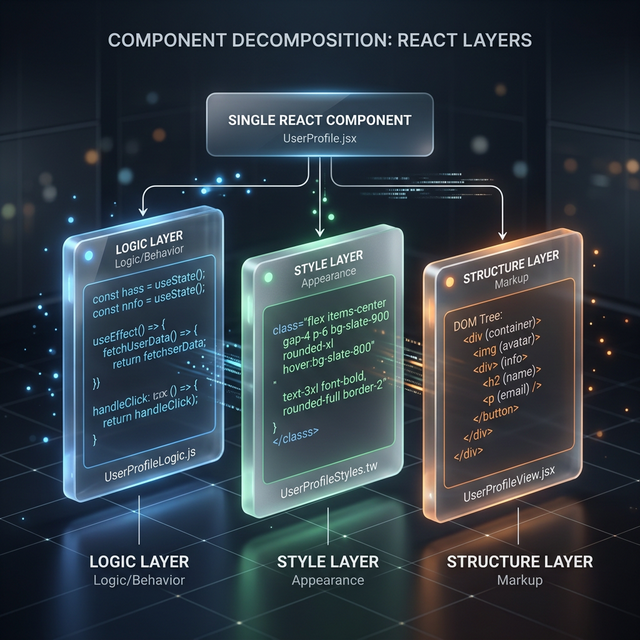
Framework Cohesion: How unified parts create a seamless dev experience.
Comparative Index
01. The 2026 Framework Landscape
For a decade, React was "just a library." Those days are over. To build for the modern web, you need a framework that understands the full stack—from how a header section is pre-rendered on the server to how a complex data table hydrates in the browser.
The shift toward "Server-First" development means frameworks are now judged by their ability to ship zero-bundle-size components while maintaining a rich interactive experience.
02. The Big Three: Next.js, Remix, and Vite
Next.js 15+
The undisputed heavyweight. Next.js has pioneered React Server Components (RSC) and Partial Prerendering (PPR). It is the standard for enterprise scaling and high-performance SEO. Its seamless integration with Vercel and AWS Lambda makes it a powerhouse for global applications.
Remix (React Router v7)
The developer's favorite for "Web Standards" enthusiasts. Remix prioritizes loaders and actions, making it incredibly powerful for data-heavy SaaS forms and complex mutation flows. Its focus on the "Network Tab" ensures you never build slow data-fetching waterfalls.
The Vite Ecosystem
For aquellos who want absolute control without the "framework tax," the Vite ecosystem provides the building blocks—Waku, TanStack Start, and others—to build a custom architecture. This is perfect for internal tools or highly specialized analytics dashboards.
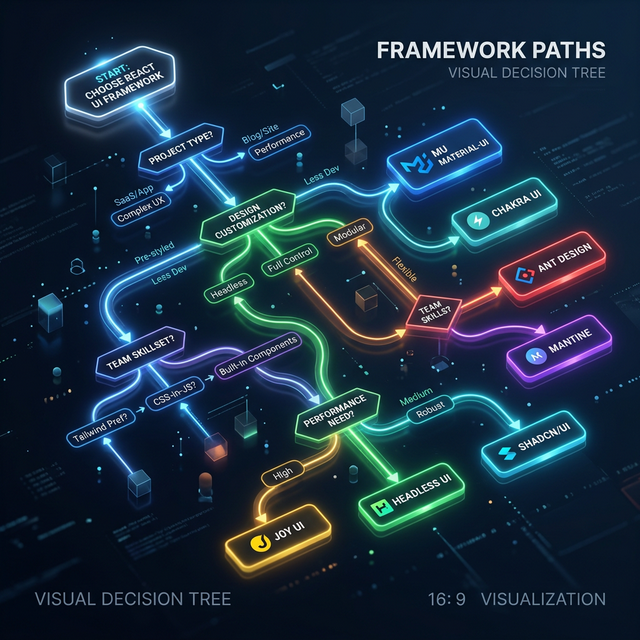
Decision Tree: Selecting the right framework for your project scale.
03. The Power of React Server Components (RSC)
Frameworks that support RSC correctly allow you to build "Hybrid" UIs. Imagine a feature-grid that fetches its own data on the server but contains interactive buttons that run on the client.
This balance is critical for 2026 performance. By reducing the JavaScript payload sent to the client, you ensure that pages like hero layouts load instantly even on low-powered mobile devices.
04. Global Edge Performance
In 2026, "Performance" means "Edge Performance." Next.js and Remix both excel at running logic as close to the user as possible.
When you build a global about page, your framework should ensure that the static assets are served from the CDN, while user-specific sections (like "Recently Viewed") are rendered in a nearby serverless function.
05. Ecosystem Support and Library Compatibility
A framework is only as good as its neighbors. In 2026, we look for:
- Styling Support: First-class support for Tailwind-based UI and zero-runtime CSS.
- Data Hydration: Compatibility with libraries like TanStack Query and Apollo for complex state sync.
- Testing Hub: Seamless integration with Vitest and Playwright for ensuring your navigation works as expected.
06. Security Boundaries and Enterprise Readiness
Frameworks like Next.js 15 provide built-in security features like `server-only` packages and automatic CSRF protection for secure forms. This infrastructure handles the "boring but critical" parts of security, allowing you to focus on the UI.
07. Making the Technical Choice
Follow this simple guide:
- Choose Next.js: If you need SEO, scalability, and the latest React features like RSC. Great for marketing and landing pages.
- Choose Remix: If you are building a data-rich application (CRM, ERP) where data mutations and "offline-first" vibes are critical.
- Choose Vite/Waku: If you are building a micro-service or a prototype that needs minimum abstraction.
Frequently Asked Questions
Is React Router still a framework?
Yes! React Router v7 merged with Remix to create a unified framework that covers both client-side and server-side navigation. It's an excellent choice for complex dashboards.
Can I switch frameworks mid-project?
It's hard. But if you use an "Owned Code" system like IndoUI for your UI components, the visual part of the migration is easy—you just copy the code to the new framework's components folder.
Explore Related React Components
Accelerate your development with our production-ready, accessible, and highly customizable UI blocks.
Build on a Solid Foundation
The framework you choose is your foundation. IndoUI's components are designed to be framework-agnostic, ensuring they look and perform perfectly whether you're using Next.js, Remix, or a custom Vite setup.
Scale your Frontend